


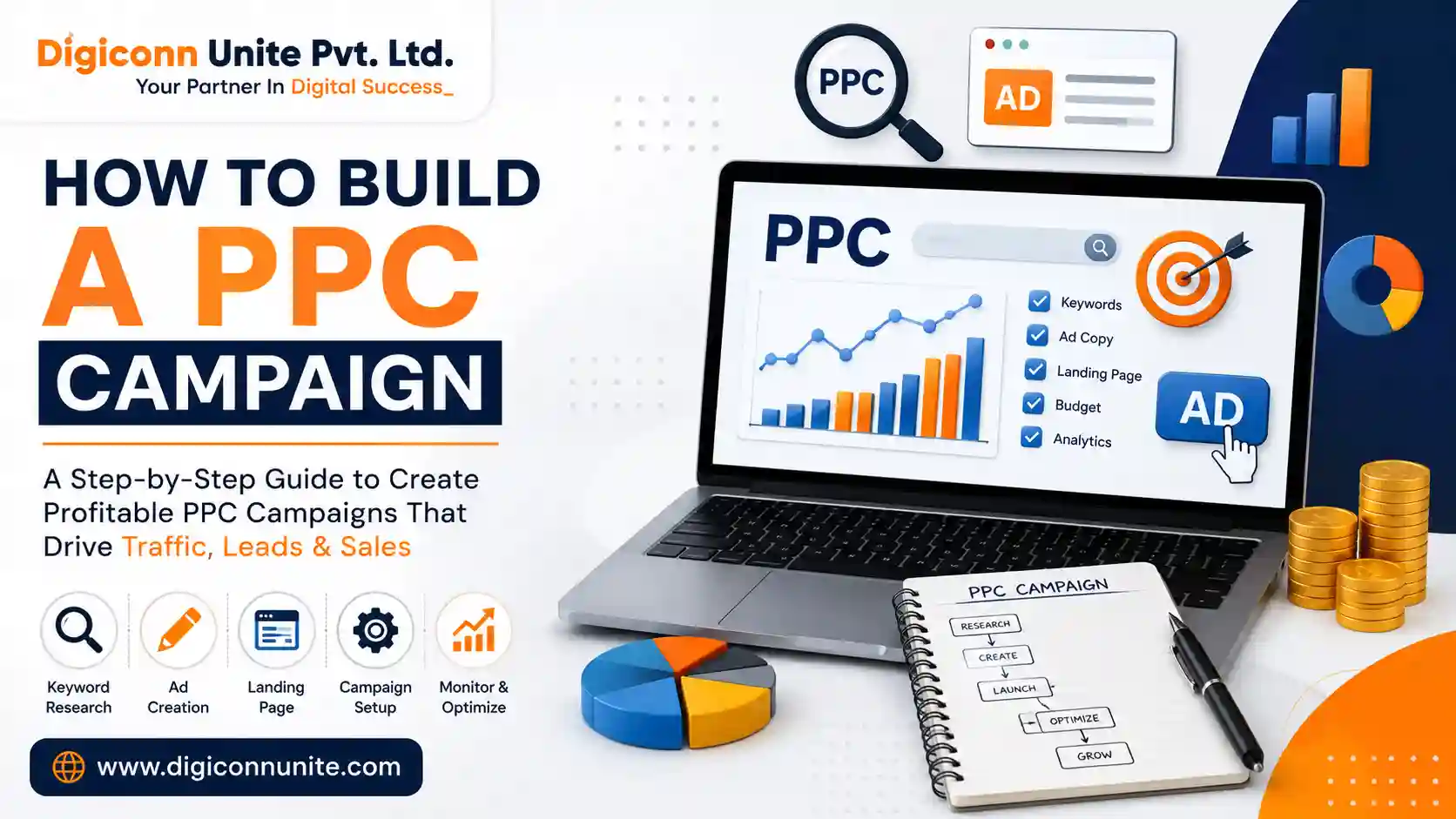
Pay-Per-Click (PPC) advertising is one of the fastest ways to bring targeted visitors to your website. Unlike organic marketing, where results may take time, a well-planned PPC campaign can start showing your ads to potential customers as soon as the campaign is approved and launched.
However, creating a successful campaign is not simply about selecting a few keywords and setting a budget. You need to understand your target audience, choose the right search terms, create relevant ads, build effective landing pages, and continuously monitor performance.
This Guide Explains How to Build a PPC Campaign Step By Step.
1. Define Your PPC Campaign Goal
The first step is to decide what you want to achieve.
Different businesses may have different PPC goals, such as:
- Generating leads
- Increasing online sales
- Getting phone calls
- Promoting a specific service
- Increasing website traffic
- Creating brand awareness
- Encouraging app downloads
For example, if you run a local service business, your main goal may be to generate enquiries. In that case, your campaign should focus on high-intent keywords and landing pages with clear contact forms or call buttons.
Without a clear goal, it becomes difficult to measure whether your PPC campaign is successful.
2. Understand Your Target Audience
Before selecting keywords or writing advertisements, understand who your ideal customers are.
Consider questions such as:
- Who is searching for your product or service?
- What problem are they trying to solve?
- Which location are they searching from?
- Are they ready to buy or still researching?
- Which device are they likely to use?
For example, someone searching for “Best IT Company in Agra” may have stronger purchase intent than someone searching for “how to choose a IT Company”.
Understanding search intent helps you target the right audience and avoid spending money on irrelevant clicks.
3. Conduct Proper PPC Keyword Research
Keyword research is one of the most important parts of a PPC campaign.
Look for keywords that are relevant to your service and match the intent of your target customer.
You can group keywords into categories such as:
High-Intent Keywords
These users are usually closer to taking action.
Examples:
- Buy running shoes online
- PPC services near me
- Hire a web designer
- Book an appointment
Informational Keywords
These users are looking for information.
Examples:
- What is PPC advertising?
- How does Google Ads work?
- Benefits of paid advertising
Informational keywords can be useful for awareness campaigns, but they may not always generate immediate conversions.
The best PPC strategy depends on your business objective.
4. Organise Keywords into Relevant Ad Groups
Do not place every keyword into one large ad group.
Instead, organise keywords based on closely related services, products, or customer intent.
For example, a digital marketing campaign could have separate ad groups for:
- SEO Services
- PPC Services
- Social Media Marketing
- Website Development
This makes it easier to create advertisements that are directly relevant to the keywords being searched.
Better keyword organisation can also improve campaign management and help you understand which services are performing well.
5. Use Negative Keywords
Negative keywords prevent your advertisements from appearing for irrelevant searches.
For example, if you offer paid PPC management services, you may not want to show ads for searches such as:
- Free PPC course
- PPC jobs
- PPC salary
- PPC internship
Adding relevant negative keywords can reduce wasted advertising spend.
Review search terms regularly because new irrelevant queries may appear after your campaign starts running.
6. Write Clear and Relevant PPC Ads
Your advertisement should clearly match the user's search intent.
A good PPC ad usually includes:
- A relevant headline
- A clear benefit
- A strong reason to choose your business
- A simple call to action
For example:
Headline: Professional PPC Management Services
Description: Reach high-intent customers with targeted advertising campaigns. Get expert campaign management today.
Avoid making unrealistic claims just to increase clicks. Your ad should accurately represent the service or offer available on the landing page.
7. Create a High-Converting Landing Page
Getting clicks is only the first part of a PPC campaign. The landing page needs to encourage visitors to take action.
A good PPC landing page should include:
- A clear headline
- Relevant information
- Key benefits
- Trust signals
- A simple contact form
- Clear call-to-action buttons
- Mobile-friendly design
- Fast loading speed
The content of your landing page should closely match the advertisement and keyword.
For example, if your ad promotes PPC management services, sending users to a general homepage may not be as effective as sending them to a dedicated PPC service page.
8. Set a Realistic PPC Budget
You do not need to spend a large amount immediately.
Start with a budget that allows you to collect enough data about:
- Clicks
- Search terms
- Cost per click
- Conversions
- Cost per conversion
The right budget depends on your industry, competition, target location, keyword costs, and campaign goals.
Instead of focusing only on the number of clicks, focus on whether those clicks are producing valuable business results.
9. Set Up Conversion Tracking
Conversion tracking is essential for understanding whether your advertising spend is producing results.
Depending on your business, a conversion may include:
- Form submissions
- Phone calls
- Purchases
- Appointment bookings
- WhatsApp enquiries
- Newsletter sign-ups
Without conversion tracking, you may know how many people clicked your ad but not whether those visitors actually became leads or customers.
Accurate tracking helps you make better decisions about keywords, ads, budgets, and landing pages.
10. Launch, Monitor, and Optimise the Campaign
A PPC campaign should not be left unchanged after launch.
Regular optimisation may include:
- Reviewing keyword performance
- Adding negative keywords
- Improving ad copy
- Adjusting bids
- Testing landing pages
- Reviewing conversion data
- Improving audience targeting
- Pausing poorly performing keywords
PPC works best as an ongoing process. The data collected from your campaign can help you identify what customers are searching for and which advertising strategies are producing better results.
You May Like Also: PPC Management Service in Agra
Common PPC Campaign Mistakes to Avoid
Businesses often waste advertising budgets because of avoidable mistakes.
Some common problems include:
- Targeting overly broad keywords
- Ignoring negative keywords
- Sending traffic to irrelevant pages
- Not tracking conversions
- Using the same ad for every keyword
- Ignoring mobile users
- Stopping optimisation after launch
- Focusing only on clicks instead of business results
Avoiding these mistakes can help make your PPC budget more efficient.
Why Work with a Professional PPC Agency?
Managing PPC campaigns requires keyword research, campaign setup, conversion tracking, ad optimisation, and regular performance analysis.
A professional PPC agency in Agra can help businesses create campaigns based on their goals, target audience, service areas, and available advertising budget.
At Digiconn Unite, PPC strategies are developed with a focus on relevant traffic and measurable business outcomes. The process includes understanding the business objective, researching customer search behaviour, creating targeted campaigns, monitoring performance, and making data-based improvements.
Final Thoughts
Building a PPC campaign involves much more than creating an advertisement. A successful campaign starts with clear goals and continues through keyword research, audience targeting, ad creation, landing page optimisation, conversion tracking, and regular improvements.
The basic process can be summarised as:
Set Goals → Research Audience → Find Keywords → Create Ad Groups → Add Negative Keywords → Write Ads → Build Landing Pages → Set Budget → Track Conversions → Optimise Regularly
When every stage works together, PPC advertising can become an effective way to reach potential customers who are actively searching for your products or services.
Related Topics
Explore more about paid search marketing:
