


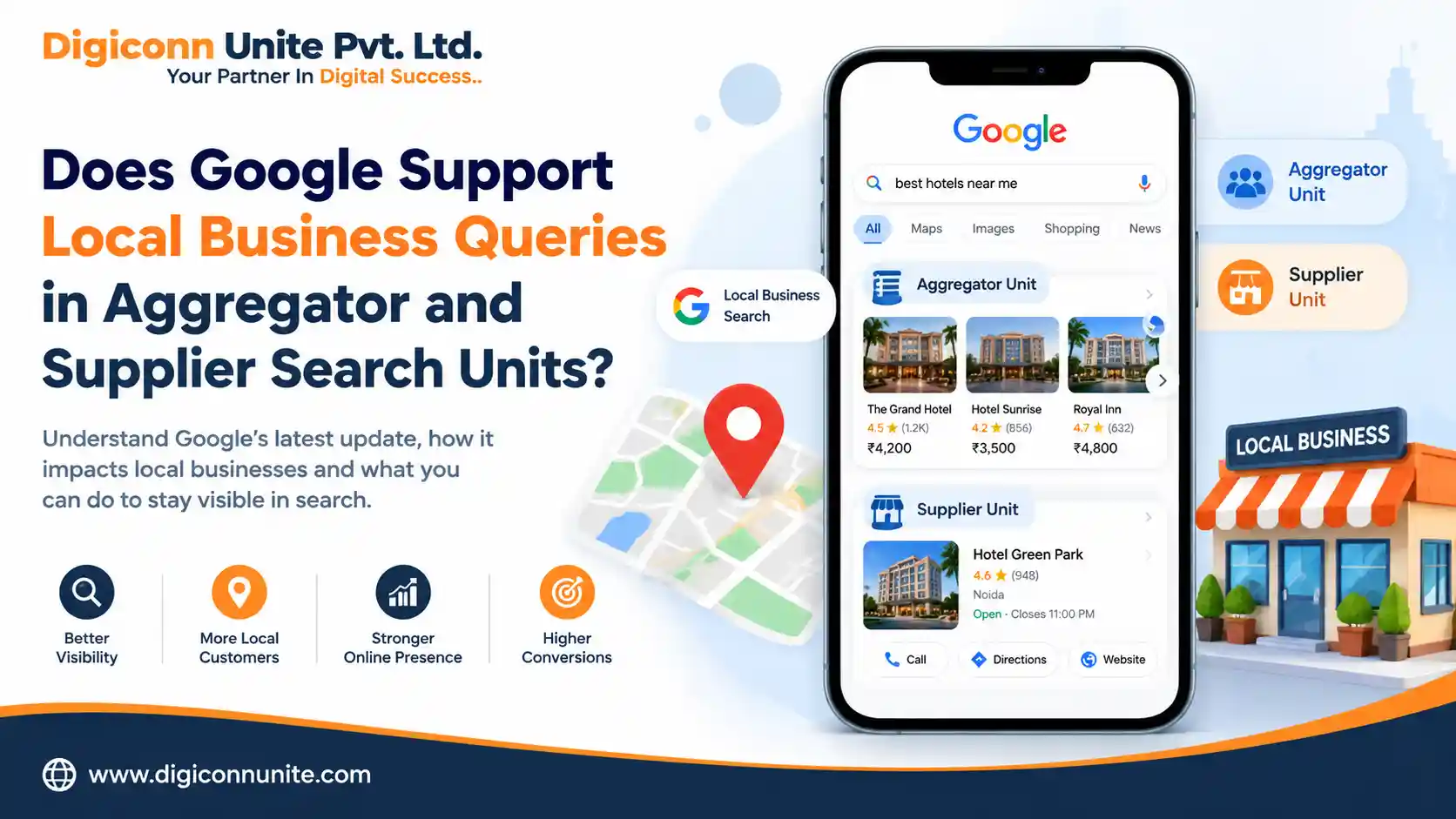
Yes. As of September 18, 2026, Google officially supports local business queries in both its Aggregator Unit and Supplier Unit, but the feature has important regional and eligibility limitations. Google updated its Search documentation on September 18, 2026, specifically adding local business query support to these two search units.
This change is relevant to local businesses, directories, marketplaces, comparison services and businesses that depend on local search visibility. However, it does not mean that every local business will automatically appear in an Aggregator or Supplier Unit.
Quick Answer: What Has Google Changed?
Google's Aggregator and Supplier Units can now support searches related to local businesses.
The current Google documentation says the feature is available in the European Economic Area (EEA) when the relevant Aggregator Unit appears. Local business queries are included alongside searches involving hotels, flights, long-distance transportation and products.
In simple terms:
-
Aggregator Unit: Designed for eligible multi-provider services such as directories, comparison services and other Vertical Search Services.
-
Supplier Unit: Designed for direct providers, including brick-and-mortar businesses and service providers.
-
Local business queries: Now supported within these experiences in the applicable region.
-
Availability: Regional, not a universal Google Search feature.
-
Eligibility: Depends on Google's requirements and the type of business or service involved.
You MayLike Also: Google Search Profile Badge Feature
What Is Google's Aggregator Unit?
The Aggregator Unit is a Google Search feature designed to show information from eligible multi-provider platforms.
Google describes these providers as Vertical Search Services (VSSs). Examples include online travel agencies, comparison shopping services, metasearch engines and directories.
For a relevant search, users may see an aggregator's results within a dedicated Search unit. Users can also select another eligible provider when alternatives are available.
For local business searches, this creates another potential search experience for businesses and platforms that meet Google's participation requirements.
What Is the Supplier Unit?
The Supplier Unit is different because it focuses on direct providers rather than aggregators.
Google gives examples such as:
-
Individual hotels
-
Airlines
-
Brick-and-mortar businesses
-
Plumbing providers
-
Other direct service providers
The Supplier Unit appears alongside the Aggregator Unit and only appears when the Aggregator Unit appears.
This distinction is important.
An aggregator represents multiple providers, while a supplier is the business or provider directly offering the product or service.
Does Google Now Support Local Business Queries?
Yes, but only in the supported regional experience.
Google's documentation now explicitly lists local businesses among the query types supported by the Aggregator and Supplier Units in the EEA. Google's regional Search documentation also lists local businesses for these features.
This means a search related to a local service or business can potentially trigger these units when Google's systems determine that the feature is appropriate and the participating entities meet the requirements.
It does not mean that every local query will show an Aggregator or Supplier Unit.
Google determines which Search features appear based on the query, available data, eligibility and the Search experience available in that region.
Why Is This Important for Local Businesses?
Local search already plays an important role in helping people discover nearby businesses.
Google explains that local results can appear across Google Search and Google Maps. Local ranking is primarily influenced by relevance, distance and prominence.
The addition of local business support to Aggregator and Supplier Units creates another part of Google's evolving local Search ecosystem.
For businesses, this makes accurate and consistent information increasingly important.
For example, information such as:
-
Business name
-
Address
-
Phone number
-
Business category
-
Website
-
Images
-
Opening hours
-
Services
-
Relevant attributes
can help Google and users understand the business.
What Is the Difference Between Aggregator and Supplier Search?
The simplest way to understand the difference is:
| Search Unit | Main Purpose | Typical Participant |
|---|---|---|
| Aggregator Unit | Shows results from multiple providers | Directory, comparison service, VSS |
| Supplier Unit | Shows direct providers | Local business or service provider |
An aggregator may help users compare several businesses or providers.
A supplier result represents the business that directly provides the service.
Google says the Supplier Unit requires the website to serve users in the EEA and the business to be a direct provider relevant to supported local business queries.
Does This Mean Every Local Business Can Appear?
No.
Supporting a query type does not guarantee inclusion.
Google's Aggregator Unit documentation says eligible participants need to meet requirements that can include being an approved Vertical Search Service, providing relevant content and data, and complying with Google's Search policies.
For Supplier Units, Google states that direct providers serving users in the EEA can be eligible for relevant supported queries. Additional data feeds can enhance supplier results when available, but Google says additional data is not required for eligibility because information accessible through web crawling can be used.
Therefore, businesses should not treat this as a guaranteed new ranking position.
How Does Local Business Data Help Google?
Google collects local listing information from several sources.
These include:
-
Publicly available information
-
Crawled website content
-
Licensed third-party data
-
User contributions
-
Google Business Profile information
-
Google's own interactions with a place or business
Google says this information helps it provide more complete and current local listings.
This is one reason businesses should keep their information accurate across important online sources.
Is Google Business Profile Still Important?
Yes.
The new Aggregator and Supplier Unit documentation does not replace Google Business Profile.
Google's existing local search guidance says businesses should verify their Business Profile and keep business information complete and accurate. Google also states that local ranking is primarily based on relevance, distance and prominence.
Businesses should therefore continue to maintain their Google Business Profile rather than treating the new search units as a replacement for local SEO.
Does LocalBusiness Schema Help?
It can help Google understand information about a local business, but it does not guarantee a specific Search appearance.
Google recommends using LocalBusiness structured data to provide information about a business. Depending on the business, more specific subtypes such as Restaurant, HealthClub or DaySpa may be appropriate.
Useful information can include:
-
Business name
-
Physical address
-
Opening hours
-
Business details
-
Departments
-
Relevant business information
Structured data should accurately represent visible information on the page and should be implemented according to Google's guidelines.
What Should Local Businesses Do Now?
Businesses should focus on the fundamentals rather than trying to manipulate the new Search units.
Keep Business Information Consistent
Make sure your business name, address, phone number and other important details are accurate.
Maintain Your Google Business Profile
Keep your profile verified and updated with relevant business information, images and other appropriate details.
Improve Your Website
Your website should clearly explain:
-
What your business does
-
Where you operate
-
Which services you provide
-
How customers can contact you
Use Relevant Structured Data
Where appropriate, implement accurate LocalBusiness structured data. Google says this can help it understand business information and may support certain Search appearances.
Build Genuine Local Prominence
Google says prominence can be influenced by information such as links from other websites and reviews.
The focus should be on earning legitimate mentions, reviews and links rather than trying to manufacture signals.
How Can a Local SEO Company Help?
A Local SEO Company can help businesses manage the broader local search ecosystem rather than focusing on one Google feature.
A practical local SEO strategy may include:
-
Google Business Profile optimisation
-
Local keyword research
-
Location-focused website content
-
Citation management
-
Review management
-
Local link building
-
Technical SEO
-
LocalBusiness structured data
-
Website optimisation
-
Performance monitoring
The important point is that local SEO should support real customers and accurate business information, not simply target a particular Search feature.
How Can Digiconn Unite Approach This Change?
For businesses monitoring changes in Google's local Search experience, Digiconn Unite can use these developments as part of a broader local SEO strategy.
The focus should remain on making a business easy for Google and potential customers to understand: accurate business information, useful location-specific content, a technically sound website, relevant structured data and a properly maintained Business Profile.
Google's documentation makes clear that Search features vary by region and query, so businesses should not assume that an Aggregator or Supplier Unit will appear for every local search.
Frequently Asked Questions
Does Google support local business queries in Aggregator Units?
Yes. Google added support for local business queries to its Aggregator Unit documentation in September 2026. The current documented availability is in the EEA.
Does Google support local businesses in Supplier Units?
Yes. Google now lists local businesses among the supported query types for Supplier Units in the EEA when the relevant Aggregator Unit appears.
Can any local business appear in the Supplier Unit?
No. The business must meet Google's regional and eligibility requirements and be a direct provider relevant to supported local queries.
Is the feature available worldwide?
No. Google's current documentation describes regional availability. The Aggregator and Supplier Unit documentation specifically identifies the EEA for these experiences.
Does LocalBusiness schema guarantee visibility?
No. Structured data helps Google understand business information, but Google does not guarantee that a particular Search feature will appear.
Should businesses change their local SEO strategy because of this update?
Businesses should not abandon existing local SEO fundamentals. Accurate business information, a complete Business Profile, useful website content, local relevance and genuine prominence remain important for local search.
Final Answer
Yes, Google now supports local business queries in its Aggregator and Supplier Units, but the documented feature is regional and currently applies to the EEA. Aggregator Units are intended for eligible multi-provider services, while Supplier Units are intended for direct providers such as individual local businesses and service providers.
For local businesses, the practical takeaway is straightforward: keep your business information accurate, maintain your Google Business Profile, improve your local website content, use appropriate structured data, and build genuine local prominence.
The new search units are another development in Google's local Search ecosystem, not a replacement for the fundamentals of local SEO.
Read also: B2B Digital Marketing Agency in UAE
Our Social Links:
Related Topics
Explore more about seo:
