


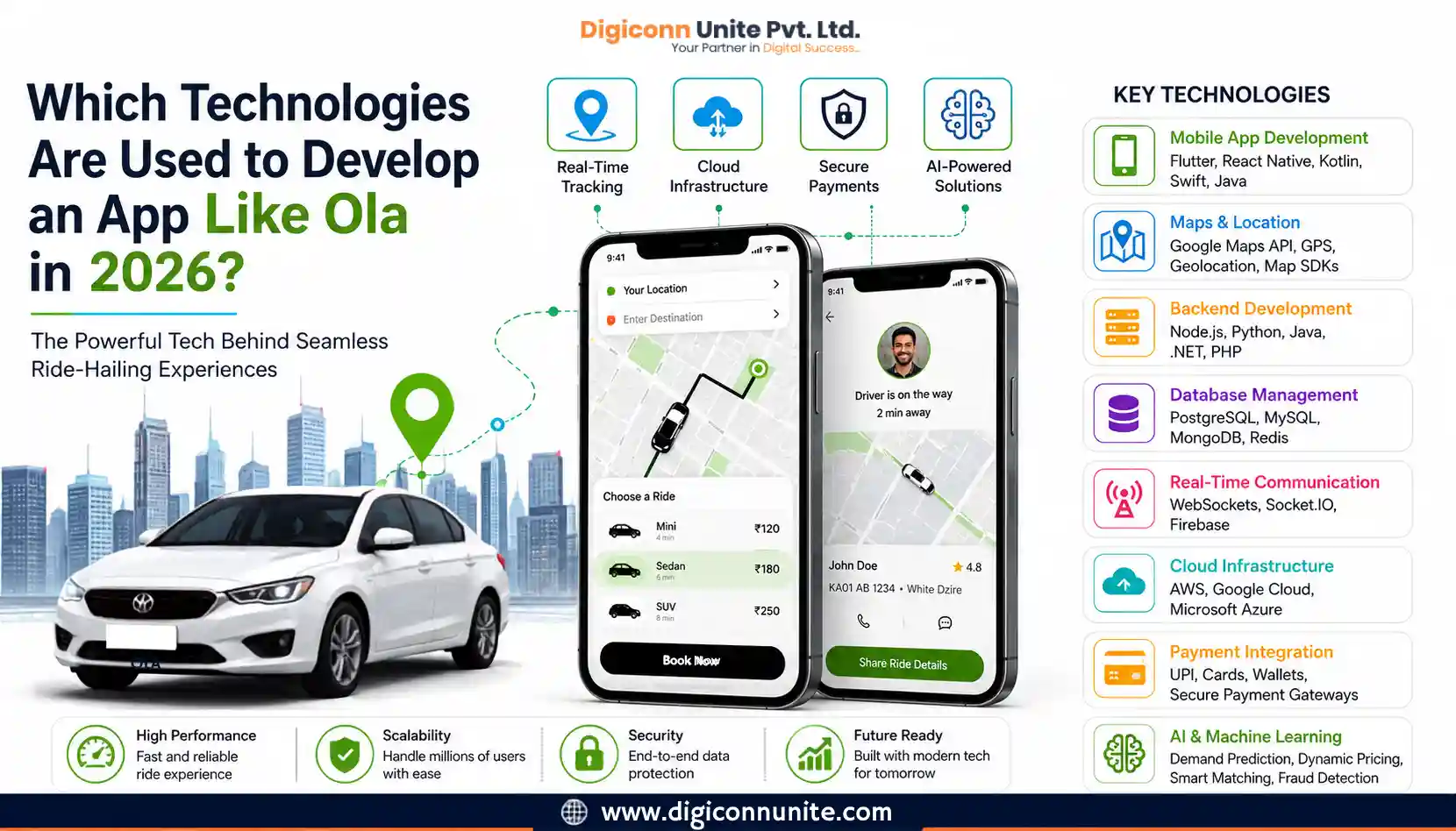
Booking a cab through an app takes only a few seconds. You enter your destination, check the fare, choose a ride, and watch the driver move towards your location on a live map.
Simple for the user, right?
But behind an app like Ola, there is a complex combination of technologies working together. The platform needs to manage live locations, connect passengers with nearby drivers, calculate fares, process payments, send notifications, and store thousands or even millions of trip records.
This is why building a successful ride-hailing platform requires more than basic mobile application development. A reliable mobile app development company needs to select the right technology stack based on performance, security, scalability, and the future requirements of the business.
So, which technologies are used to develop an app like Ola in 2026? Let's break it down in simple language.
1. Mobile App Technologies for Android and iOS
The first step in taxi booking app development is choosing how the passenger and driver applications will be built.
There are two main approaches: native app development and cross-platform app development.
Native App Development
Native apps are developed separately for Android and iOS.
Common technologies include:
- Kotlin and Java for Android app development
- Swift for iOS app development
Native development can offer excellent performance and smooth access to device features such as GPS, cameras, notifications, and background location tracking.
However, building separate apps for both platforms may require more development time and resources.
Cross-Platform App Development
Cross-platform technologies allow developers to use a shared codebase for Android and iOS.
Popular options include:
- Flutter
- React Native
This approach can be useful for businesses that want to launch on multiple platforms efficiently. The final choice depends on the required features, expected user base, budget, and long-term development plans.
Professional mobile app development services should always focus on the actual requirements of the project rather than simply choosing the most popular technology.
2. GPS and Map Technologies
Live location tracking is one of the most important features of an app like Ola.
The system needs to know:
- Where the passenger is located
- Which drivers are nearby
- How far the driver is from the pickup point
- Which route should be taken
- The estimated arrival time
Technologies and services that can support these features include:
- GPS
- Google Maps Platform
- Geolocation APIs
- Map SDKs
- Route and distance APIs
A good mobile application development company must also consider location accuracy and battery usage. Continuous GPS tracking can consume significant device resources, so the app needs a well-planned approach to location updates.
3. Backend Technologies: The Engine Behind the App
The mobile app is what users see, but the backend handles most of the important work.
When a passenger requests a ride, the backend may need to find available drivers, send ride requests, calculate fares, update ride status, and store trip information.
Common technologies used for backend development include:
- Node.js
- Python
- Java
- PHP
- .NET
Node.js is often considered for applications that require fast, event-based communication. Python can support data processing and AI-related features, while Java remains a strong choice for large-scale systems.
The backend architecture is an important part of custom mobile app development, especially when an application is expected to support a growing number of users.
4. Database Technologies for Managing Large Amounts of Data
A ride-booking platform generates a large amount of information every day.
The system may store:
- Passenger profiles
- Driver details
- Vehicle information
- Booking history
- Payment records
- Ratings and reviews
- Location-related data
Different databases may be used depending on the structure and scale of the application.
Popular options include:
- PostgreSQL
- MySQL
- MongoDB
- Redis
For example, PostgreSQL can be useful for structured and relational data, while MongoDB offers flexibility for certain types of data. Redis can help with caching and fast access to frequently changing information.
Choosing the right database is an important part of scalable app development services.
5. Real-Time Communication Technologies
Imagine booking a cab, but the app takes several minutes to show whether a driver has accepted your request.
That would be frustrating.
Ride-hailing apps need real-time communication between passengers, drivers, and backend systems.
This can support:
- Instant ride requests
- Driver acceptance
- Live location updates
- Trip status changes
- Real-time alerts
Common technologies may include:
- WebSockets
- Socket.IO
- Firebase
- Real-time messaging services
For example, when a driver accepts a booking, the passenger should immediately receive the update. This instant communication is a major part of a smooth user experience.
6. Cloud Infrastructure for Scalability
A small app may work well with a limited number of users, but what happens when thousands of people try to book rides at the same time?
This is where cloud infrastructure becomes important.
Popular cloud platforms include:
- AWS
- Google Cloud
- Microsoft Azure
Cloud technology can support:
- Scalable servers
- Data storage
- Database management
- Application monitoring
- Backup systems
- Security tools
An experienced app development company should consider scalability from the beginning. Rebuilding the entire infrastructure later can become expensive and complicated.
7. Secure Payment Integration
Payment is another essential part of cab booking app development.
Users may prefer different payment methods, including:
- UPI
- Debit cards
- Credit cards
- Digital wallets
- Net banking
A secure payment gateway allows the application to process transactions safely.
Important areas include:
- Payment security
- Transaction confirmation
- Failed payment handling
- Refund management
- Payment history
The development team should follow appropriate security and compliance requirements for the regions where the application operates.
8. AI and Machine Learning for Smarter Ride Booking
Artificial intelligence can help make ride-hailing platforms smarter.
In 2026, AI and machine learning can potentially support:
- Demand forecasting
- Better driver-passenger matching
- Estimated arrival times
- Dynamic pricing
- Fraud detection
- Customer support automation
For example, the system can analyse historical data to identify locations where ride demand is likely to increase.
However, good mobile app developers do not add AI just because it is a trending technology. AI should solve a real problem and improve the experience for users or the business.
9. Security Technologies for User and Business Protection
Ride-hailing apps handle important information, including personal details, location data, and payment-related information.
Security should therefore be part of the development process from the beginning.
Important security measures can include:
- Data encryption
- Secure authentication
- API security
- Access controls
- Secure cloud configuration
- Regular security testing
- Monitoring for suspicious activity
A trusted provider of mobile app development services should also plan for regular updates because security requirements can change as the application grows.
Final Thoughts
Developing an app like Ola in 2026 requires multiple technologies working together. There is no single technology that can build the entire platform.
A typical technology stack may include Flutter or React Native for cross-platform app development, Kotlin for Android, Swift for iOS, Node.js or Java for backend systems, PostgreSQL or MongoDB for databases, GPS and map APIs for live tracking, WebSockets for real-time communication, cloud platforms for scalability, and secure payment APIs for transactions.
The best technology stack depends on your business model, budget, target audience, required features, and future growth plans.
Whether you are planning on-demand app development, taxi booking app development, or another type of custom mobile app development, the goal should be to build a secure, reliable, and scalable platform.
Choosing the right mobile app development company can make this process easier. A skilled development team can help you plan the app architecture, select suitable technologies, build separate driver and passenger apps, integrate real-time features, and prepare the platform for future growth.
You may also like this blog:- how to create Android safety app development
Related Topics
Explore more about mobile app development:
