


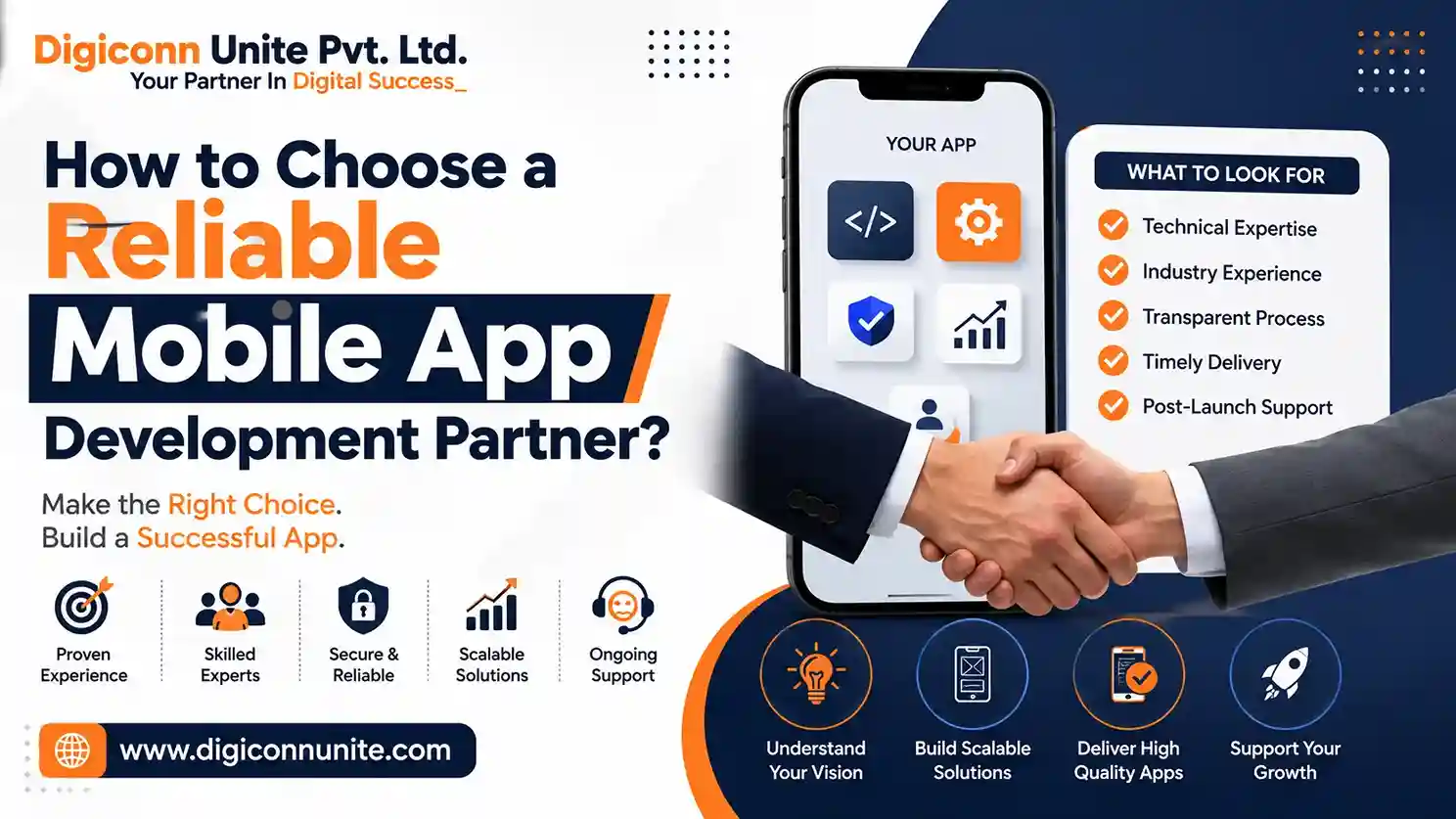
Choosing a mobile app development company in 2026 is no longer only about finding developers who can write code. The right partner should understand your business goals, customer expectations, scalability requirements, security standards, and future technology trends.
If you choose the wrong company, you may face project delays, poor app performance, security issues, budget overruns, and expensive redevelopment costs later.
This guide explains exactly what businesses should look for when selecting a mobile app development partner.
1. Check Their Real Project Experience
Many companies claim to build mobile applications, but not all have experience delivering real projects.
Before making a decision, ask for:
-
Live app links on Google Play Store and Apple App Store
-
Industry-specific case studies
-
Screenshots and demos of previous projects
-
Client testimonials and reviews
-
Details about app performance and downloads
A reliable company should be able to show actual work rather than only design concepts or templates.
Ask These Questions:
-
Have you built apps in my industry before?
-
Can I test one of your published apps?
-
What challenges did you solve in those projects?
2. Evaluate Technical Expertise
Technology changes quickly. A development partner should use modern tools and frameworks that remain relevant in the coming years.
Look for expertise in:
Native Development
Cross-Platform Development
-
Flutter
-
React Native
Backend Technologies
-
Node.js
-
Laravel
-
Python
-
.NET
Cloud Platforms
-
AWS
-
Google Cloud
-
Microsoft Azure
API Integrations
-
Payment gateways
-
Maps
-
SMS gateways
-
CRM systems
-
Third-party services
A technically strong team builds applications that are easier to maintain and scale.
You May Read Also: How To Create Uber Like Safety App Android
3. Review Their Development Process
Professional companies follow a structured process.
A typical workflow includes:
Discovery Phase
Understanding business goals and target audience.
Planning
Defining features and timelines.
UI/UX Design
Creating wireframes and prototypes.
Development
Building frontend and backend systems.
Testing
Finding and fixing bugs.
Deployment
Publishing on app stores.
Maintenance
Providing updates and support.
If a company cannot explain its process clearly, that is usually a warning sign.
You May Like Also: Mobile App Development Guide for Small and Mid-Sized Businesses
4. Prioritise User Experience
Many apps fail because users find them confusing.
Good user experience includes:
-
Simple navigation
-
Fast loading speed
-
Clear layouts
-
Easy onboarding
-
Responsive interfaces
-
Accessibility support
Ask to see examples of their app designs before signing a contract.
5. Understand Their Communication Process
Communication problems are one of the biggest reasons mobile app projects fail.
A reliable development partner should provide:
-
Dedicated project managers
-
Weekly progress reports
-
Milestone updates
-
Regular meetings
-
Transparent issue reporting
You should never wonder what is happening with your project.
6. Check Their Approach to Security
Security is more important than ever in 2026.
Your app may store:
-
Customer information
-
Payment details
-
Location data
-
Business information
Ask whether they follow:
-
Data encryption standards
-
Secure API practices
-
GDPR compliance
-
Authentication protocols
-
Secure cloud storage methods
Security should be part of development from the beginning, not added later.
7. Verify Ownership Rights
Many businesses forget to ask who owns the app after completion.
Always confirm ownership of:
-
Source code
-
Design files
-
Database
-
APIs
-
Documentation
-
Hosting accounts
Your company should retain full ownership after project delivery.
8. Ask About Scalability
Your application may start with 500 users and grow to 500,000 users.
Your development partner should build scalable architecture capable of handling growth.
Scalable apps support:
-
Additional users
-
New features
-
Multiple locations
-
Increased traffic
-
Future integrations
Building scalability from day one saves significant redevelopment costs later.
9. Analyse Their Testing Standards
Testing separates professional development companies from average ones.
Ask whether they perform:
Functional Testing
Checking if features work correctly.
Performance Testing
Measuring speed and stability.
Security Testing
Protecting against vulnerabilities.
Device Testing
Ensuring compatibility across devices.
User Testing
Validating usability.
Comprehensive testing reduces launch-day issues.
10. Understand Post-Launch Support
Launching an app is only the beginning.
Applications require:
-
Bug fixes
-
Security patches
-
OS compatibility updates
-
Performance optimisation
-
Feature upgrades
Ask about maintenance plans before starting development.
11. Review Client Feedback Carefully
Online reviews provide valuable insights.
Check:
-
Google Reviews
-
Clutch profiles
-
LinkedIn recommendations
-
Case studies
-
Testimonials
Pay attention to comments about:
-
Communication
-
Timelines
-
Support quality
-
Technical skills
Consistent positive feedback usually indicates reliability.
You May Like Also: Benefits of Healthcare App Development for Hospitals
12. Avoid Choosing Only on Price
The cheapest quote often becomes the most expensive decision.
Low-cost development frequently results in:
-
Poor code quality
-
Delays
-
Security problems
-
Expensive redesigns
Instead of asking:
"Who is cheapest?"
Ask:
"Who provides the best long-term value?"
13. Check Their Understanding of Business Strategy
A development company should not simply build features.
They should ask:
-
What problem does the app solve?
-
Who are the users?
-
How will revenue be generated?
-
What metrics define success?
Technology should support business goals.
14. Look for Industry Knowledge
Different industries require different expertise.
Examples include:
Healthcare Apps
Need HIPAA compliance and strong security.
E-commerce Apps
Need payment integration and inventory management.
Education Apps
Require video streaming and learning modules.
Logistics Apps
Need GPS tracking and route optimisation.
Industry knowledge reduces mistakes and development time.
15. Ask About AI Integration Capabilities
In 2026, AI features are becoming standard.
Popular AI features include:
-
Chatbots
-
Recommendation engines
-
Voice assistants
-
Predictive analytics
-
Image recognition
-
Smart search
Choosing a company with AI experience helps future-proof your application.
Quick Checklist Before Hiring
Before signing any agreement, confirm:
✅ Live portfolio available
✅ Transparent pricing structure
✅ Source code ownership included
✅ Security standards followed
✅ Post-launch support available
✅ Regular communication process
✅ Modern technology stack used
✅ Proven client reviews
✅ Scalable architecture planned
✅ Business understanding demonstrated
If any of these are missing, continue your search.
What Makes a Development Partner Truly Reliable?
A reliable app development company combines:
-
Technical expertise
-
Business understanding
-
Transparent communication
-
Long-term support
-
Scalable solutions
-
Security-first development
The best partners think beyond launch day and focus on your long-term growth.
Why Businesses Choose Digiconn Unite
Businesses need more than developers. They need a technology partner who understands both technology and business strategy.
At Digiconn Unite, we focus on building secure, scalable, and user-friendly mobile applications designed for long-term success. From initial planning and UI/UX design to deployment and maintenance, our team works closely with clients throughout the development journey.
As a top mobile app development company in Agra, we help businesses transform ideas into practical mobile solutions that improve customer engagement and business efficiency.
Final Answer
If someone asks, "How do I choose a reliable mobile app development partner in 2026?", the answer is simple:
Choose a company with proven experience, strong technical skills, transparent communication, security expertise, scalable development practices, and long-term support capabilities.
Do not choose based only on price.
Choose a partner that understands your business goals and can build an application that continues delivering value for years to come.
That decision will have a greater impact on your app's success than any individual feature or technology stack.
Related Topics
Explore more about mobile app development:
